
Atmospheric Graveyards of Scotland and the Coffin Roads
26th October 2026
Away from the Ordinary is getting in the spirit of Halloween this year with an exploration of Scotland’s atmospheric graveyards and its network of coffin roads. In the ancient glens of the Scottish Highlands, there were many rituals surrounding death. The dead would be carried in a procession for many, many miles to a burial ground, sometimes over mountains and across bodies of water. It was believed that the coffin could not touch the ground until the sacred grounds. Once you have walked these coffin roads, you realise just what a tremendous physical challenge that would have been. The ‘roads’ are more like single-track paths that run through heather and rock, and the graveyards they lead to are often in remote, scenic locations. These roads now make up a significant part of the path network in the Scottish Highlands and can be enjoyed by walkers to this day.
Further south in Scotland, there were different customs and more affluent, organised religion. The abbeys, kirks and graveyards of Edinburgh and the Scottish Borders tell a very different story to the ones of the north, but are just as interesting and infinitely more documented.
Macnabs at Killin
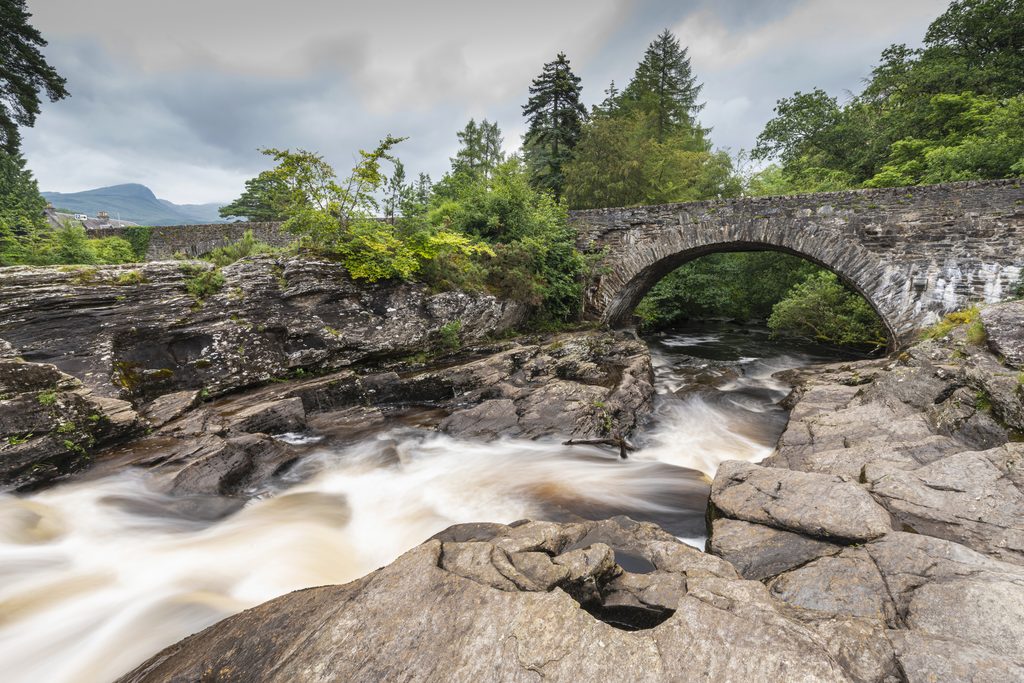
Set in the beautiful village of Killin, the Clan Macnab’s ancestral burial ground reflects the area’s roots. It offers a glimpse into the lives and heritage of the Macnabs and their long-standing connection to Killin and the areas surrounding Loch Tay. The graveyard is situated on the small island of Inchbuie, or Innis Bhuidhe in Gaelic, in the River Dochart, right by the famous Falls of Dochart. Nine Macnab clan chiefs are buried within its historic enclosure, which features distinctive stone arches and carved gravestones. To visit the graveyard, you need to ask at the local shop for the key to the iron gates to secure access, which is part of the charm.
There is a coffin road connecting Killin with Bridge of Orchy that passes Loch Lyon. It would have been used by many different families carrying their dead over hundreds of years. Nowadays, it is used for leisure and offers wonderful access to stunning countryside.
Eilean Fhianain, Loch Shiel
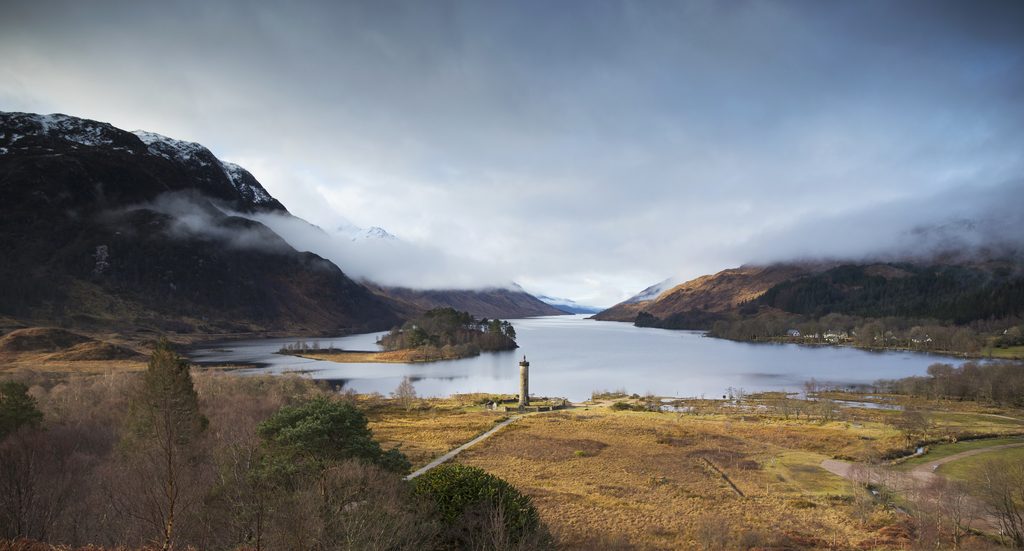
St. Finnan’s Isle is a small, peaceful island on Loch Shiel, surrounded by the spectacular scenery of the Scottish Highlands. The island forms part of a landscape rich in history, natural beauty and Jacobite heritage. Its tranquil setting, with woodland, loch and mountain views, makes it a distinctive feature of the area. The island’s Gaelic name is Eilean Fhianain, and it is home to the ruins of an ancient chapel and a historic burial ground associated with the Clan MacDonald of Clanranald. Tradition links the island to St Finnan, an early Christian missionary. It has served as a sacred place of pilgrimage and burial for centuries.
Today, you can visit the island by boat from Glenfinnan and Acharacle, at either end of Loch Shiel, with Loch Shiel Cruises. You can also walk the old coffin road that leads from Kinlochmoidart to the west end of Loch Shiel, where people would’ve carried their loved ones, and then floated them by boat to their final resting place on Eilean Fhianain.
Ballachulish’s Eilean Munde

Ballachulish Burial Isle, Eilean Munde, is a small island in Loch Leven, near Ballachulish in the Scottish Highlands. The island contains the ruins of an ancient chapel traditionally associated with St Munde, who is believed to have established a religious site there in the seventh century. For centuries, it served as a shared burial ground for local Highland clans, including the MacDonalds of Glencoe, the Camerons of Callart and the Stewarts of Ballachulish. It is only accessible by boat, and the weathered gravestones and secluded setting surrounded by dramatic mountain scenery give it an otherworldly feel that transports you back in time.
Kelso Abbey

In the southeast of Scotland, Kelso Abbey stands as a living relic of times gone by. The graveyard, located beside the ruins of the abbey, is a historic burial place reflecting the town’s long religious and cultural heritage. The abbey was founded in 1128 by monks and became one of the most important religious centres in medieval Scotland. It was the head of the Tironensian monastic order and even saw the coronation of James III. Due to its location near the border, it suffered frequent bombardment from English attacks and has been ruined since the 1500s. The surrounding grounds offer a peaceful setting to explore the area’s past, and are an especially atmospheric place to visit near Halloween, with its historic gravestones and the abbey’s imposing Gothic architecture.
Greyfriars Kirkyard
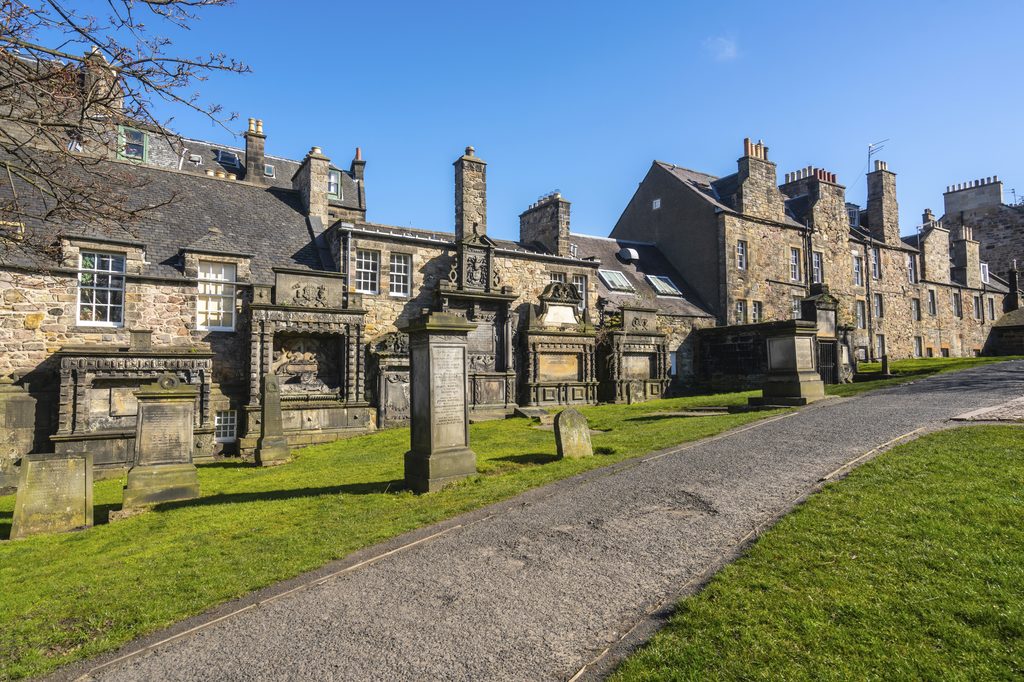
Greyfriars Kirk is home to one of Edinburgh’s most famous historic graveyards, dating back to 1562 and situated in the heart of the Old Town. It is known for its strong connections to Scotland’s religious and political history, particularly the Covenanters, who signed the National Covenant at Greyfriars Kirk in 1638 to oppose King Charles I’s attempted changes to the Church. The graveyard is also associated with the legend of Greyfriar’s Bobby, the loyal dog said to have guarded his owner’s grave for 14 years following his death. On a more macabre topic, it was also allegedly one of the spots where the infamous Burke and Hare robbed corpses from graves to sell to the university, before moving on to murder of the living. It was also a place that famous author J.K. Rowling took inspiration for the naming of Harry Potter characters. Today, it is a fascinating place to explore Edinburgh’s storied past.
Glasgow’s Necropolis
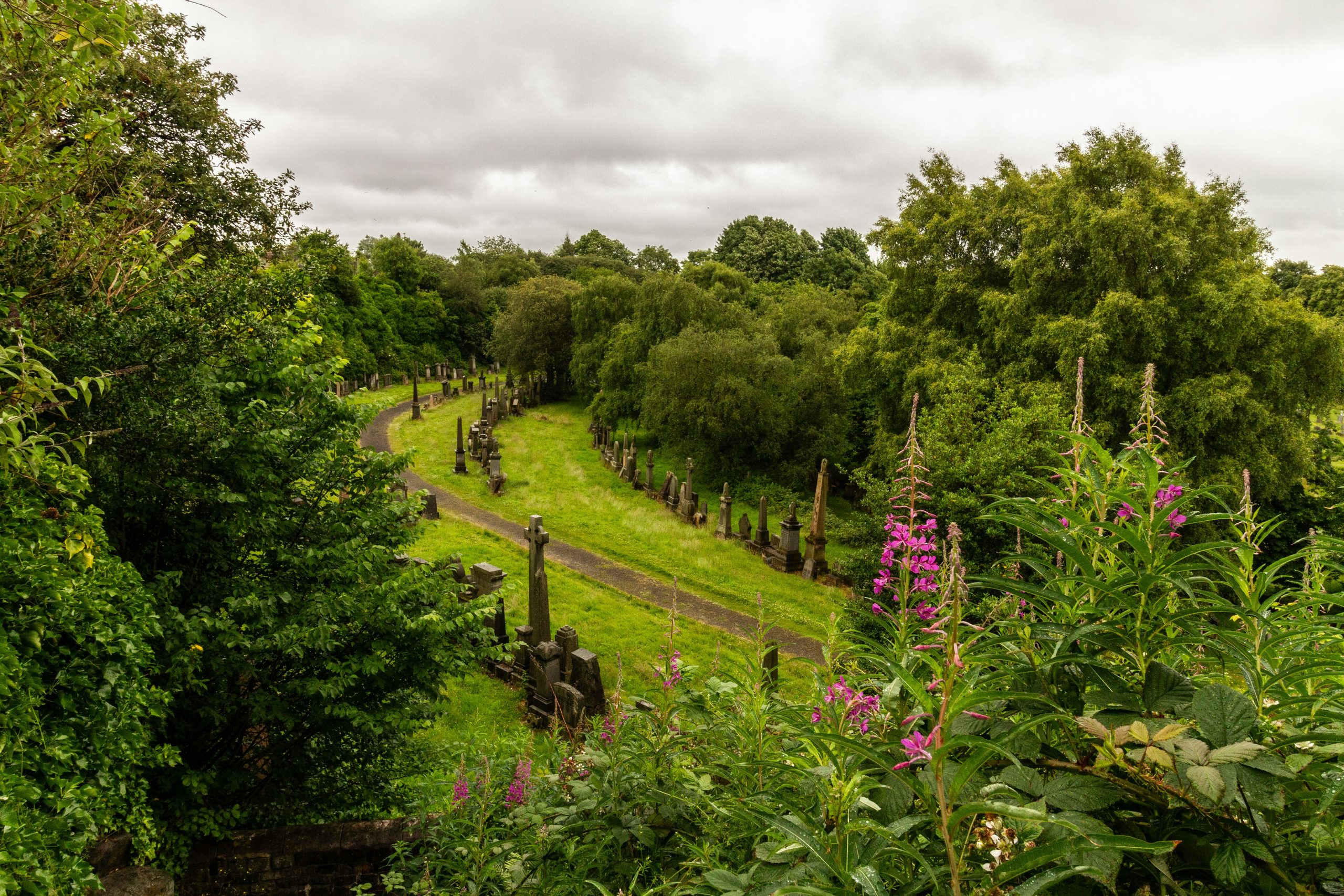
The Glasgow Necropolis is a Victorian cemetery situated on the hill beside Glasgow Cathedral. Opened in 1833, it is the final resting place of around 50,000 people and contains thousands of elaborate monuments, tombs and mausoleums. Many of these were designed by renowned architects and sculptors, reflecting the wealth and influence of Glasgow during the nineteenth century. As well as being an interesting spot for history lovers, it is also one of the best places to enjoy panoramic views of the city of Glasgow and is a popular walking spot amongst locals and tourists alike.
Away from the Ordinary can arrange visits to all these graveyards with a private guide. To begin planning your bespoke trip to Scotland, get in touch with Away from the Ordinary today.
Read More:
Away from the Ordinary Ltd.
Summit House
4 - 5 Mitchell Street
Edinburgh
EH6 7BD
Terms and Conditions